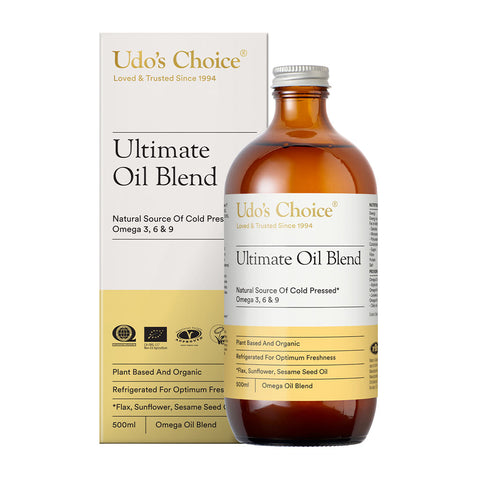
High in omega-3 fatty acids. 11g of ALA in two tablespoons.
-
High in omega-3 fatty acids — 38g per 100ml
-
11g ALA per 30ml serving — over five times the 2g associated with the cholesterol claim1
-
2:1 ratio, omega-3 to omega-6 — 38g ALA to 19g LA per 100ml
- Certified organic seed oils, cold-pressed and unrefined
- Amber glass, refrigerated — not heat-stable, not for cooking
- 250ml and 500ml · Vegan · Dairy free
Plant omega-3 or marine omega-3?
We stock both, so here is the difference in plain terms.
Alpha-linolenic acid is an essential fatty acid. Your body cannot make it — it has to come from food, which is exactly what "essential" means in nutrition. It is also the omega-3 that carries an authorised claim in its own right.
This oil is an ALA source in unusual quantity: 11g in a single 30ml serving, far more omega-3 by weight than a fish oil capsule provides, and it brings omega-6 and omega-9 with it. It is also the only route to omega-3 for anyone eating a plant-based diet.
Marine oils supply EPA and DHA, the long-chain omega-3s, directly. Plenty of people take both — an ALA-rich oil daily, with marine oil alongside it if they eat little or no oily fish.
Oil or capsules?
Same blend, two formats, and they suit different habits.
|
30ml oil (2 tbsp) |
2 capsules |
| Omega-3 (ALA) |
11g |
0.8g |
| Omega-6 (LA) |
5.8g |
0.4g |
| Refrigeration |
Required |
Not needed |
| Taste |
Noticeable |
None |
The oil is the option if quantity is what you are after. The capsules are the portable, unrefrigerated, tasteless version of the same blend — easier to keep up on a working week or a trip. A lot of people keep the oil at home and capsules in a bag.
What is in it
The base is 96.68% organic seed oil — flax, sunflower and sesame. Flax is the omega-3 source; sunflower and sesame bring the omega-6 and omega-9.
Then small, deliberate additions: virgin coconut oil (1.70%), evening primrose oil (1.00%), rice bran oil (0.30%) and oat bran oil (0.01%), with soya lecithin as an emulsifier and mixed tocopherols as an antioxidant to protect the oil in the bottle.
Why the packaging matters here
Unrefined polyunsaturated oil degrades on contact with light, heat and oxygen. That is why it arrives in amber glass, why it is refrigerated in transit and in store, and why the instruction is not to cook with it.
Practically: keep it in the fridge, finish it within the period stated after opening, and add it to food rather than to a pan. Drizzle it over cooked vegetables, stir it through soup off the heat, blend it into a smoothie, or use it as the oil in a dressing.
Where it is made
Manufactured in Canada by Flora Manufacturing & Distributing in Burnaby, British Columbia, using a seed oil blend sourced from the USA. Imported and distributed in the UK by Savant Distribution, Leeds.
Common questions
How much do I take?
30ml is two tablespoons and the serving the nutrition panel is based on. Many people take less day to day; the figures scale proportionally.
Can I cook with it?
No. Heat damages the fatty acids the oil exists to deliver. Add it after cooking.
Why does it need refrigerating when capsules do not?
A capsule seals the oil away from oxygen and light. A bottle does not.
Is it the same as flaxseed oil?
Flax is the largest single component but not the whole. The sunflower, sesame and other oils set the omega-3 to omega-6 ratio at 2:1 rather than leaving it flax-dominant.
250ml or 500ml?
Same oil. The 500ml is better value; the 250ml is the sensible first purchase if you have not used an oil like this before, since it must be finished within a set period after opening.
Allergens?
Contains soya (lecithin). May contain traces of mustard and wheat.
Ingredients
Seed Oil Blend (Flax Oil*, Sunflower Oil*, Sesame Oil*) (96.68%), Virgin Coconut Oil* (1.70%), Evening Primrose Oil* (1.00%), Soya Lecithin* (emulsifier), Rice Bran Oil* (0.30%), Oat Bran Oil* (0.01%), Mixed Tocopherols (antioxidant). *Certified Organic.
Allergy advice: for allergens, see ingredients in bold. May contain traces of mustard and wheat.
Nutrition Information
|
Per 100ml |
Per 30ml (2 tbsp) |
| Energy |
3347kJ / 814kcal |
1004kJ / 244kcal |
| Fat |
90g |
27g |
| — saturates |
10g |
3.1g |
| — monounsaturates |
16g |
4.7g |
| — polyunsaturates |
58g |
17g |
| Carbohydrate |
0g |
0g |
| — sugars |
0g |
0g |
| Fibre |
0g |
0g |
| Protein |
1g |
<0.5g |
| Salt |
0g |
0g |
|
Omega-3 (alpha-linolenic acid) |
38g |
11g |
|
Omega-6 (linoleic acid) |
19g |
5.8g |
|
Omega-9 (oleic acid) |
14g |
4.1g |
Suggested use
30ml (2 tablespoons) daily. Add to food or drinks — do not heat. Refrigerate after opening and use within the period stated on the bottle.
1 Alpha-linolenic acid (ALA) contributes to the maintenance of normal blood cholesterol levels. The beneficial effect is obtained with a daily intake of 2g of ALA. Linoleic acid (LA) contributes to the maintenance of normal blood cholesterol levels; that beneficial effect is obtained with a daily intake of 10g of LA.
High in omega-3 fatty acids.
Food supplements should not be used as a substitute for a varied, balanced diet or a healthy lifestyle.